Capitalization Policy Considerations for SaaS & Hosting

John Q. Todd
Sr. Business Consultant/Product Researcher Total Resource Management (TRM), Inc.
July 31, 2025
Developing a policy for the capitalization of the costs and spending to have software application suites hosted in the cloud, in the Utilities industry, is a relatively new activity for these organizations. Yet, migrating from an on-premises to a cloud hosting situation is a very common modernization and/or transformation project for enterprise application suites.
While there is a clear distinction between cloud-related costs and the infrastructure investments made for on-premises situations. Further, Utilities have developed their own capitalization policies that they use to guide their actions to stay in step with the regulatory agencies and the auditors they encounter. Cloud hosting companies, such as TRM, can be flexible with agreement language to assist in achieving a customer’s capitalization policy when a move to the cloud is initiated by companies such as a Utility.
CapEx vs. OpEx
It begins with the distinction between these two financial aspects. CapEx costs + profit can be recovered by most Utilities, while only the costs related to OpEx can be recovered. There is an incentive to spend CapEx because the organization can earn a return (costs + profit).
Flexible Cloud Solutions
The technical flexibility of cloud solutions for enterprise software suites that support the ever-changing needs of an organization has been well established. The ability to flex compute, storage, availability, security, and other aspects of the environment as needs arise has proven to be of high value at increasingly reasonable costs.
The goal is to maximize the financial benefits of adopting the cloud-based operating model, much in the same way owning on-premises servers and software has been in the past.
For example:
A move to the Cloud project could be divided into these segments to make the expenditure clear in the contract between the Utility and the hosting/implementing company. The arrangement may be a mixture of upfront and subscription costs.
- Term or perpetual licensing
- Hosting costs (compute, storage, security, disaster recovery, availability, etc.)
- Implementation/Services costs
- Maintenance costs
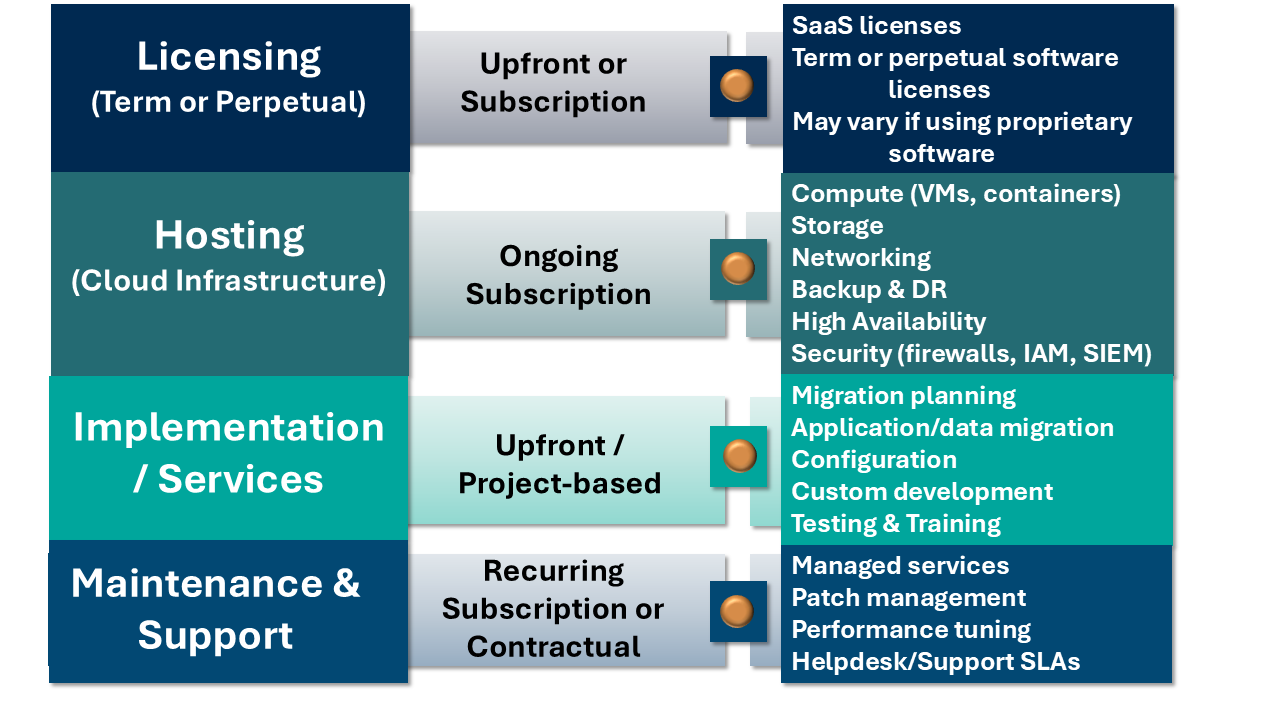
Guidance will come from the client’s capitalization policy approach to support compliance. Proposal language, contractual language, and even invoicing instructions will all support the client’s policy, and line up with what the hosting company provides.
This approach provides the flexibility to contractually describe the arrangement so that it is very clear how the costs are being classified or characterized. These details are very important when it comes to rate-case justification and auditing activities by regulators.
Conclusion
TRM has been assisting clients across industries for over 30 years in improving their business processes and maximizing the use of their EAM solution. The upgrade process from legacy Maximo to the IBM MAS solution allows for the opportunity to move from an on-prem situation to one that is hosted in the cloud. In the context of a Utility where capitalization is a critical financial decision, engaging with a trusted and knowledgeable partner is equally critical. TRM can quickly provide a quote for a cloud hosting approach for IBM MAS that meets the requirements of the business.
There are many advantages (not just financial) to the cloud that might not be apparent, so let us help you work through the details and develop a solution that benefits the business now and well into the future.
Ready to elevate your asset management?
Connect with TRM to start your journey toward exceptional performance.
Related Resources
Explore insights, guides, and tools designed to help you unlock greater asset management performance and business value.


Unlock smarter
asset management
Ready to elevate your asset management?
Connect with TRM to start your journey toward
exceptional performance.