Whatever Happened to the Internet of Things?

Darren Kwasnycia
Client Solutions Manager, TRM
With all the buzz about Generative AI and AI agents, whatever happened to the focus on IoT, Industry 4.0 and Connected Devices? Were they just buzz words? Were they just marketing jargon to solicit the attention of a growing market of users? In some cases, yes, but there is substance behind the terms, and we are going to get to the bottom what these things truly are and discuss how they can be used to create a pragmatic roadmap for business value.
The Internet of Things (IoT) is not a new term. It is a pre-Y2K term that was coined by Kevin Ashton in 1999 as a system of sensors that would capture physical information and transform it into digital data. If you really think about it as a definition the concept was probably around much longer than that.
Let’s get into this further.
The Internet of Things (IoT) refers to assets embedded with sensors that collect data over a network, eliminating the need for human intervention in data collection, transmission, and decision-making by leveraging the gathered information. In this domain of Condition Based Maintenance, IoT can be something as simple as a temperature probe on a gear box or a vibration sensor on a drive shaft to look for anomalies that could indicate an issue.
Devices and sensors that are either supplied by the OEM or via third party addon’s are used to collect data. The devices must be smart and able to connect to the internet using a variety of communication protocols. The device could be something as simple as Bluetooth. Data collected is sent to be processed, the data is then analyzed to help make smarter decisions and potentially even adjust the asset through an automatic data feedback loop. Slowing down a belt for example. Cities have been using this technology for years from an operational perspective. An example would be adjusting traffic light duration based on the feedback from cameras looking at congestion patterns.

As IoT started to cross over into the industrial setting it was coined Industry 4.0 and started to include AI and robotics. One of the biggest areas of adoption in the asset management space is around predictive maintenance. Moving away from scheduled maintenance and instead using real time data from the asset to provide a better picture of asset health and provide early signs of asset degradation in the hopes of reducing unplanned downtime and preventing breakdowns. AI can add extra levels of insight, such as parts availability and supply chain bottlenecks.
Some use cases that IoT (and sometimes AI) have been widely adopted include:
- Predictive Maintenance
Sensors and AI predict equipment failures before they occur. - Condition Monitoring and Fault Detection
Real-time monitoring detects anomalies and alerts maintenance teams. - Real-Time Asset Tracking and Visibility
Live tracking provides location and usage data for critical assets. - Automated Maintenance Scheduling
AI automates maintenance planning based on asset condition. - Overall Equipment Effectiveness (OEE) Optimization
IoT data helps identify and improve manufacturing efficiency. - Digital Twins
Virtual models simulate and optimize asset performance. - Remote Monitoring and Control
Operators can monitor and control equipment from anywhere. - Inventory and Spare Parts Management
IoT tracks inventory and AI forecasts spare parts demand. - Fleet and Logistics Management
IoT tracks vehicles and optimizes fleet operations. - Hazardous Material and Perishable Goods Management
Sensors monitor storage conditions for safety and quality. - Resource Allocation and Utilization Optimization
Real-time data helps maximize asset usage and minimize downtime.
How IBM Integrates IoT for Condition Based Maintenance
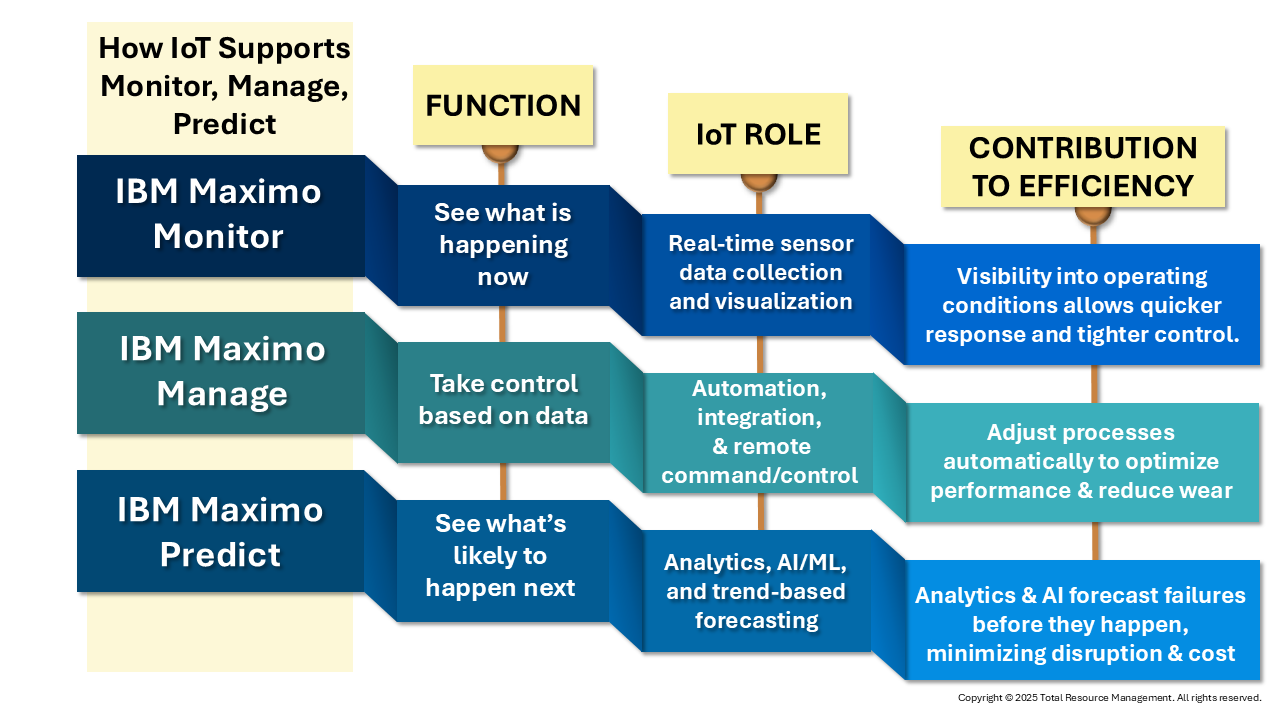
From a platform/solution perspective, the Maximo Application Suite was designed with IoT as a focal point. IBM Maximo Manage holds all the traditional knowledge about our assets and how we respond to failure. Maximo Monitor collects that real time data from the assets and provides insight into what the assets are telling us. Maximo Predict can start to analyze the data and give indication of trending failures before they occur saving both time and money.
IoT or Industry 4.0 shows much promise and continues to evolve but does face challenges such as security, interoperability with the variety of device manufactures, data management due to the amount of data being collected and power consumption of devices. Despite these areas of concern the technology evolves. Faster networks, edge computing and AI only make the technology smarter, quicker and of more benefit to the adopters of the technology.
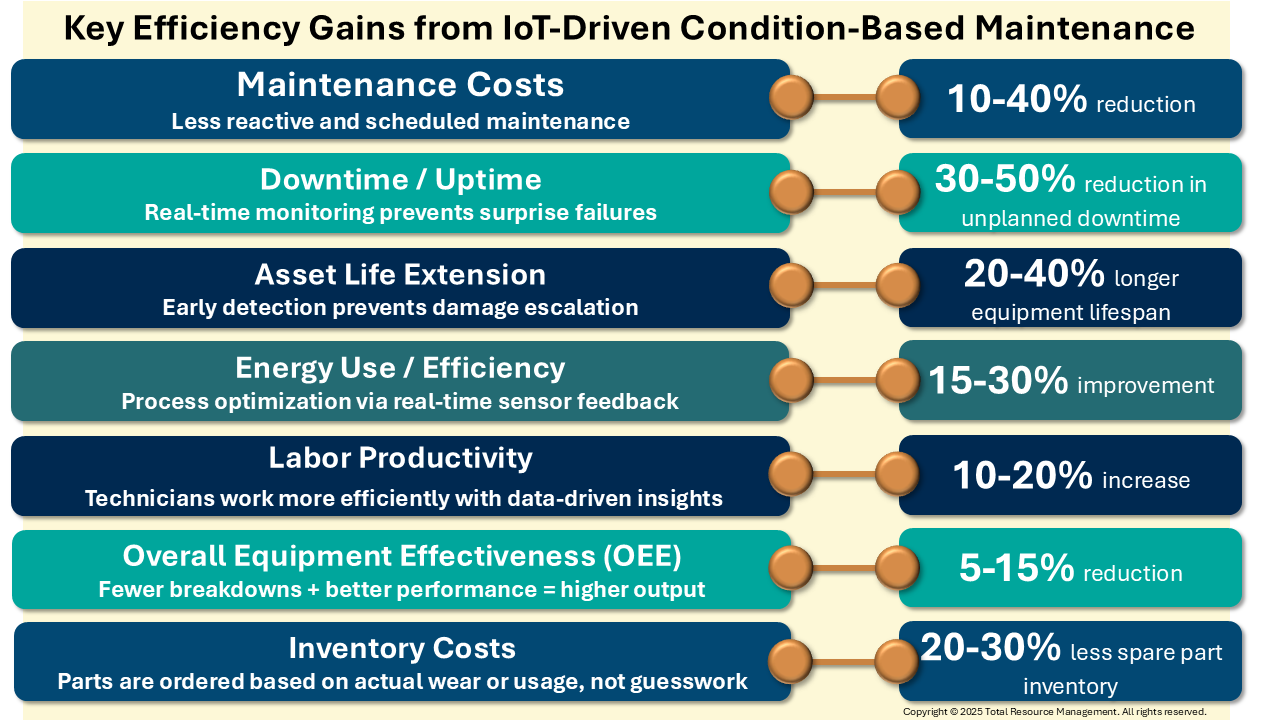
It’s safe to say that the Internet of Things is not just a trend or buzz word. It is transforming industries. IoT continues to evolve automation, insights and the way users interact with their assets.
TRM has been driving digital transformation across industries for many years. With deep expertise in People, Processes, and Technology, we are committed to helping you navigate the opportunities and challenges of Industry 4.0. Let’s connect to explore your goals and how we can support your journey forward.
Ready to elevate your asset management?
Connect with TRM to start your journey toward exceptional performance.
Related Resources
Explore insights, guides, and tools designed to help you unlock greater asset management performance and business value.


Unlock smarter
asset management
Ready to elevate your asset management?
Connect with TRM to start your journey toward
exceptional performance.