Predict the Future: Data Science Meets Asset Management

JJ Sindhusake
APM Solutions Manager Total Resource Management (TRM), Inc.
January 7, 2026
Data is everywhere. A massive amount of data is generated every day — from fitness trackers and smart watches to online shopping suggestions and streaming recommendations. Just as quickly as we create it, we consume it. While we see polished recommendations and data visualizations, behind the scenes raw data is being transformed into insights that shape and improve our daily lives. That’s the power of data science.
As part of the asset management discipline and the related maintenance and reliability spheres, data is transforming the way companies manage assets, people, and processes. It helps track system health, anticipate failures, and learn from historical patterns. A natural question is: “Do I need advanced data science skills to benefit from this?” The answer is no — with the right approach, these insights are within reach for most teams.
Predictive Maintenance
Predictive maintenance solutions are keeping up with the needs of companies by analyzing equipment data and flagging early signs of potential issues, which are providing insights that support maintenance teams in deciding the appropriate corrective actions. Take AspenTech’s Mtell, APM solution for example. Mtell fills in the data-science skill gaps by using Machine Learning (models) that are trained on telemetry from the sensors/devices. It takes the guesswork out of the picture and replaces it with data-driven insights to make better decisions. In the asset management world, information in EAM platforms such has HxGN and IBM Maximo can be used in Aspen Mtell to augment what the models are displaying. The API integration enhances asset management by providing predictive insights and prescriptive maintenance actions.
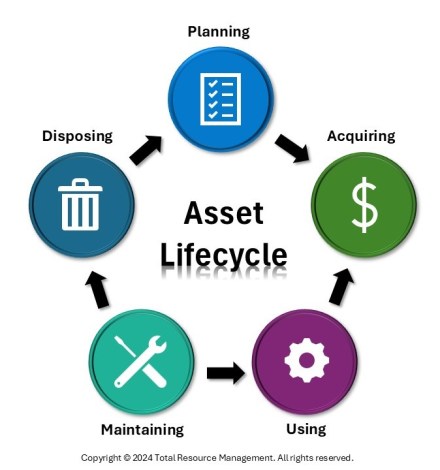
Let’s consider how Aspen Mtell uses data in each of the stages of the Asset management Lifecycle:
Planning
Asset Performance Forecasting: Aspen Mtell utilizes agents to analyze historical and real-time data, predicting future asset behavior and performance trends. It is able to analyze degradation patterns like wear on pumps, bearings and motors and predict a rate of efficiency loss or capacity decline. By looking at the frequency and type of past failures whether mechanical, electrical or process-related, Mtell can predict failure trends and provide time-to-failure statics under various operating conditions. The data that shows how past maintenance actions affected reliability, and downtime can provide a clear picture into the maintenance impact. Showing trends into which maintenance strategies extend asset life most effectively.
Lifecycle Cost Modeling: By forecasting potential failures and maintenance needs, Aspen Mtell provides results that can be used as part of a company’s financial analysis like estimating the total cost of ownership, including maintenance, downtime, and replacement costs.
Mtell helps planners predict which assets are to likely fail sooner, while estimating future performance and capacity. This enables informed data-driven decision-making during the planning phase.

Acquisition
Vendor & Asset Selection: While Aspen Mtell doesn’t directly assist in vendor selection, A company can use the predictive capabilities of Mtell to augment the vendor selection process. Using data, Mtell can provide insight into the selection of equipment with lower predicted downtime or higher efficiency. It can compare the total cost of ownership across multiple asset types. Mtell can provide results using data that can be used to prioritize assets for early replacement or upgrades before performance degrades.
Procurement Optimization: Procurement strategies are guided by Data insights by identifying assets that align with desired performance metrics and maintenance profiles. One way is by predicting how an asset will behave over its lifecycle under expected operating conditions. Procurement can even prioritize assets that meet efficiency, uptime or throughput targets. For example, insights from Mtell can help select a pump model with a lower probability of seal failure under high temperature operation.
Using reliability metrics, Mtell calculates Mean Time Between Failures (MTBF) for different asset types and provides insights to compare vendors or models based on predicted reliability. Historical sensor-driven data can predict how each potential asset will behave, fail, and cost over time.
Operation & Monitoring
Condition Monitoring: Using real-time sensor telemetry, Aspen Mtell continuously monitors asset health using agents that detect degradation patterns and anomalies, providing early warnings of potential failures. In addition to historical operational data like past failures, maintenance logs and operating conditions, Mtell ingests data from vibration sensors, temperature probes, pressure gauges, flow meters, and electrical monitors. The agents learn from the new data to improve predictions over time.
Maintenance & Reliability
Predictive Maintenance: Aspen Mtell trains models on historical sensor data like vibration, temperature and pressure as well as maintenance records to learn patterns. Using Performance metrics, trends, cycles and gradual degradation can be identified. Early-stage faults can be detected by deviations from normal behavior. Mtell predicts equipment failures before they occur, allowing for proactive maintenance scheduling and reducing unplanned downtime.
Work Order Optimization: By using predictive outputs to assess which assets are most at risk of failure, potential failures of operational consequences are evaluated. The system generates actionable alerts and integrates with Enterprise Asset Management (EAM) systems to prioritize maintenance tasks based on severity and impact.
Failure Root Cause Analysis: Aspen Mtell employs machine learning to analyze failure patterns, aiding in identifying root causes and preventing recurrence. Mtell finds relationships between operating conditions and failures and then highlights underlying causes rather than just symptoms.
Downtime & Reliability Modeling: By forecasting potential failures using reliability metrics like MTBF and MTTR Mtell can provide early warnings and insights to help organizations proactively manage downtime. By analyzing sensor data, Aspen Mtell forecasts potential failures weeks in advance, allowing maintenance teams to plan interventions proactively. The system generates alerts detailing the nature of potential failures and suggests specific corrective actions, helping teams respond effectively.
Renewal & Disposal
End-of-Life Forecasting: The platform provides insights into asset degradation, helping predict when an asset may reach the end of its useful life. By providing a data-driven estimate of remaining useful life, planners are able to anticipate replacement needs before unplanned failures occur. This foresight allows for better planning of capital expenditures to replace or upgrade critical equipment before it fails. Aspen Mtell can send maintenance alerts to scheduling tools like Aspen Plant Scheduler, enabling planners to incorporate predicted downtime into production schedules and optimize maintenance timing.
Replacement Planning: Based on predictive analytics, Aspen Mtell aids in planning for asset replacement by identifying optimal timing and resource allocation. Mtell combines data like predicted failure timing, maintenance costs, downtime risk, and energy inefficiency to determine the optimal replacement schedule. Then in an effort to minimize disruptions, the platform suggests the best timing for maintenance crews, spare parts and capital expenditure.
Conclusion
Effective asset management requires more than reactive maintenance — it demands a proactive, data-driven approach. Predictive maintenance solutions like Aspen Mtell harness operational data to anticipate equipment failures, provide actionable insights, and optimize maintenance strategies. While human expertise remains essential for interpreting these insights and deciding on corrective actions, the combination of predictive analytics and operational knowledge enables organizations to improve reliability, reduce downtime, and make smarter capital planning decisions. By integrating data science into maintenance and reliability practices, companies can transform their asset management processes from reactive problem-solving to strategic, forward-looking operations.
If you have any questions about predictive maintenance and how it fits into your overall maintenance strategy, please reach out to us at asktrm@trmgroup.com.
TRM has been working with clients and their data sets for many years across industries. Contact us so we can show you Aspen Fidelis in action and what it is capable of in the context of your operation. You will be impressed with what the solutions deliver and will clearly see how Aspen Fidelis can improve your approach to regulatory compliance. Check out the article on “Navigating Market Volatility in Oil & Gas with Aspen Fidelis”.
Follow JJ Sindhusake on LinkedIn.
Ready to elevate your asset management?
Connect with TRM to start your journey toward exceptional performance.
Related Resources
Explore insights, guides, and tools designed to help you unlock greater asset management performance and business value.


Unlock smarter
asset management
Ready to elevate your asset management?
Connect with TRM to start your journey toward
exceptional performance.